Bachelor of Science in Industrial Engineering

Program Details
- Program Code
- IE
- Degree Type
- BSc
- Duration
- 4 years
- Credits
- 244 ECTS
- Language Taught
- English
- Faculty
- Faculty of Engineering
About the Program
Mission
The Bachelor of Science (BSc) in Industrial Engineering (IE) program provides students with the expertise that they need to become successful leaders and difference-makers in this field. Students in the IE program learn a range of valuable skills.
The core courses in the IE program cover a variety of topics, such as operations research, ergonomics, management, economics and finance and statistics.
The program extends over a four-year period and is offered exclusively on a daytime, on-campus basis. The program is offered in nine terms whereby eight terms are 13-week Fall/Spring terms given over four years, and one eight-week summer term taken during the third year of the program in which students are required to participate in a practical training program with a local, regional, or international organization.
Program Educational Objectives
Graduates of the IE program will be able to:
- Assume key roles in a range of industries that use industrial engineering, including manufacturing and service.
- Effectively participate in, coordinate and manage diverse teams of engineers and analysts, especially in large-scale systems.
- Pursue advanced degrees in industrial engineering and other related fields at reputable regional and international universities.
- Appreciate the importance of professional ethics and actively use their knowledge and experience to the benefit of the community.
Learning Outcomes
Upon graduation, IE graduates will be able to demonstrate:
- an ability to identify, formulate, and solve complex engineering problems by applying principles of engineering, science, and mathematics.
- an ability to apply engineering design to produce solutions that meet specified needs with consideration of public health, safety, and welfare, as well as global, cultural, social, environmental, and economic factors.
- an ability to communicate effectively with a range of audiences.
- an ability to recognize ethical and professional responsibilities in engineering situations and make informed judgments, which must consider the impact of engineering solutions in global, economic, environmental, and societal contexts.
- an ability to function effectively on a team whose members together provide leadership, create a collaborative environment, establish goals, plan tasks, and meet objectives.
- an ability to develop and conduct appropriate experimentation, analyze and interpret data, and use engineering judgment to draw conclusions.
- an ability to acquire and apply new knowledge as needed, using appropriate learning strategies.
What Can I Do With An Industrial Engineering Degree?
A degree in Industrial Engineering prepares graduates for careers across a wide range of industries where efficiency, systems thinking, and data-driven decision-making are essential. Potential pathways include roles in manufacturing and production systems, logistics and supply chain management, operations and project management, consulting, healthcare systems, technology and data analytics, as well as engineering management and entrepreneurship.
Across these fields, Industrial Engineering graduates are valued for their ability to analyze and optimize complex systems, apply data and mathematical methods, and design efficient, scalable solutions. They bring strong problem-solving, teamwork, and communication skills, along with the ability to consider economic, environmental, and human factors in decision-making.
Student Voices
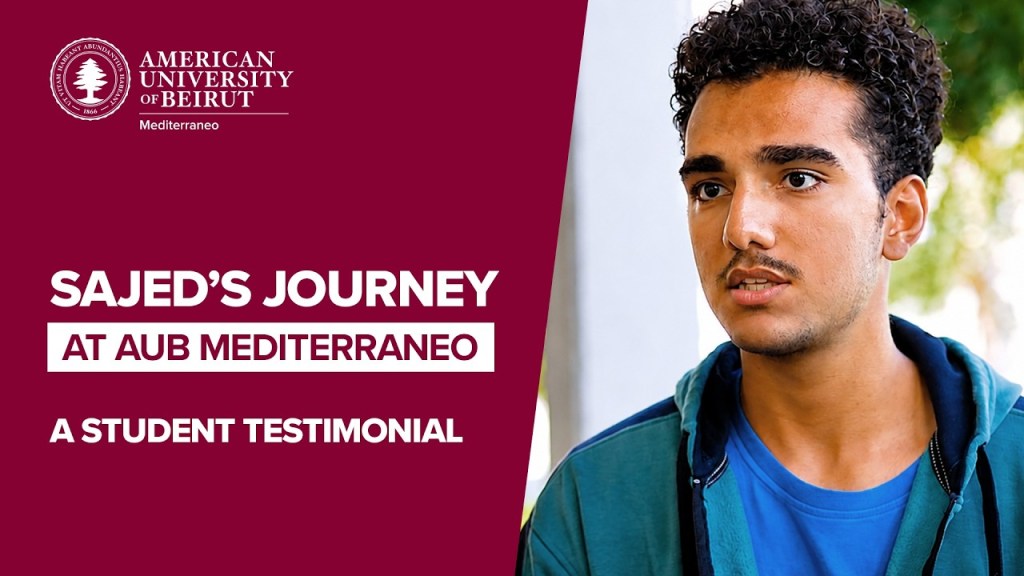
This content is hosted by YouTube (Google). Loading the video will load third-party content and may set cookies. By clicking below, you agree to load external content from YouTube.
Sajed — Bachelor of Science in Industrial Engineering
Sajed
2023

This content is hosted by YouTube (Google). Loading the video will load third-party content and may set cookies. By clicking below, you agree to load external content from YouTube.
David — Bachelor of Science in Industrial Engineering
David
2025
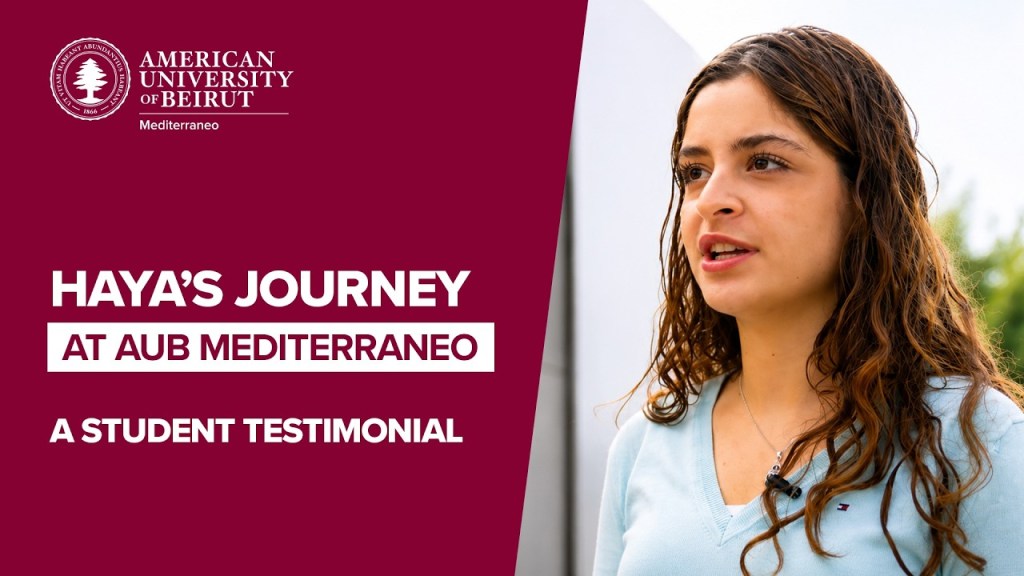
This content is hosted by YouTube (Google). Loading the video will load third-party content and may set cookies. By clicking below, you agree to load external content from YouTube.
Haya — Bachelor of Science in Industrial Engineering
Haya
2025
Academic Profile
Program Requirements
The Program Requirements outline what needs to be fulfilled for a student to graduate from this program.
| Code | Course Title | Pre/Co-requisite | Notes | ECTS |
|---|---|---|---|---|
| Required Core Courses | ||||
| CIVE 121 | Statics/Dynamics | 6 | ||
| CSEN 101 | Introduction to Programming | 6 | ||
| MECH 300 | Manufacturing Processes I | 6 | ||
| INDE 100 | Introduction to Industrial Engineering | Considered as Understanding Ourselves: Societies and Individuals | 0 | |
| INDE 200 | Engineering Economy | 6 | ||
| INDE 210 | Operations Research I | MATH 201 or Math 202 | 6 | |
| INDE 211 | Operations Research II | STAT 101 | 6 | |
| INDE 220 | Work Measurement and Methods Engineering | STAT 101 | 6 | |
| INDE 300 | Facilities Planning and Material Handling | INDE 210 and INDE 211 | 6 | |
| INDE 301 | Introduction to Project Management | 6 | ||
| INDE 302 | Human Factors Engineering | INDE 220 | 6 | |
| INDE 303 | Statistical Quality Control | STAT 101 | 6 | |
| INDE 310 | Production Planning and Inventory Control | INDE 210 and INDE 211 | 6 | |
| INDE 311 | Discrete Event Simulation | INDE 211 | 6 | |
| INDE 330 | Engineering Ethics | Considered as Understanding Our Role in the World: Our Values | 0 | |
| INDE 340 | Engineering Entrepreneurship | 4 | ||
| INDE 401 | Information Systems | CSEN 101 | 6 | |
| INDE 410 | Data Analytics for Industrial Engineering | STAT 101, INDE 200, INDE 210, INDE 211, INDE 311. | 6 | |
| INDE 450 | Approved Experience | Minimum 160 ECTS completed. Summer. | 0 | |
| INDE 460 | Final Year Project I | Completion of third year in IE requirements. Fall. | 6 | |
| INDE 461 | Final Year Project II | INDE 460. Spring. | 6 | |
| Subtotal | 106 | |||
| Required Basic Science & Math Courses | ||||
| MATH 101 | Differential Equations | MATH 100 | 6 | |
| MATH 201 | Elementary Linear Algebra with Applications orMATH 202 · Linear Algebra I | 6 | ||
| MATH 203 | Numerical Computing | CSEN 100 or CSEN 101, MATH 100 | 6 | |
| STAT 101 | Introduction to Probability and Random Variables | MATH 100. Students who complete STAT 101 cannot receive credit for STAT 100. | 6 | |
| PHYS 100 | Introductory Physics II | MATH 100 | 6 | |
| CHEM 100 | Chemical Principles orCHEM 101 · Introduction to Environmental Chemistry | 6 | ||
| Subtotal | 36 | |||
| Required Basic Business Courses | ||||
| BBAC 100 | Financial Accounting | BBAC 180 | This course is offered through the Faculty of Business | 6 |
| BBAC 201 | Fundamentals of Management and Organizational Behavior | ENGL 101 | This course is offered through the Faculty of Business | 6 |
| Subtotal | 12 | |||
| Understanding Our Communication | ||||
| ENGL 100 | Academic English | 6 | ||
| ENGL 102 | Technical English | ENGL 100. For students in Faculty of Engineering only. | 6 | |
| — | Understanding Our Communication - Foreign Language Communication in Arabic or Greek | 6 | ||
| Writing in the Disicipline | Fulfilled through an ILA-Designated Course | 0 | ||
| Subtotal | 18 | |||
| Understanding The World | ||||
| BIOL 101 | Human Biology | 6 | ||
| MATH 100 | Calculus and Analytic Geometry III | 6 | ||
| — | Understanding the World - The Earth and Planetary Systems or the Living World (1 course available) orUnderstanding the World - Quantitative Reasoning(4 courses available) | 6 | ||
| — | Understanding the World - The Earth and Planetary Systems or the Living World (1 course available) orUnderstanding the World - Quantitative Reasoning(4 courses available) | 6 | ||
| Subtotal | 24 | |||
| Understanding Ourselves (At Least Two From Each Category) | ||||
| — | Understanding Ourselves - Cultures and Histories | 6 | ||
| — | Understanding Ourselves - Cultures and Histories | 6 | ||
| — | Understanding Ourselves - Cultures and Histories orUnderstanding Ourselves - Societies and Individuals(1 course available) | 6 | ||
| INDE 100 | Introduction to Industrial Engineering | 6 | ||
| ECON 101 | Principles of Microeconomics | 6 | ||
| Subtotal | 30 | |||
| Understanding Our Role in the World | ||||
| INDE 330 | Engineering Ethics | 6 | ||
| — | Understanding Our Role in the World - Our Engagement | 6 | ||
| Subtotal | 12 | |||
| General Education Free Elective | ||||
| — | General Education Elective | 6 | ||
| Subtotal | 6 | |||
| Thematic Requirements | ||||
| First Year Student Experience | ||||
| Beirut Residency | ||||
| — | History of Ideas (28 courses available) | Fulfilled through a General Education course designated as History of Ideas; no additional ECTS required. | — | |
| — | Social Inequalities (22 courses available) | Fulfilled through a General Education course designated as Social Inequalities; no additional ECTS required. | — | |
| Total ECTS | 244 | |||
Sample Study Plan
The Sample Study Plan is an indicative plan showing how a student may fulfil the requirements for this program across their years of study.
Term 1 (Fall)
| Type | Code | Course Title | ECTS |
|---|---|---|---|
| Compulsory | CSEN 101 | Introduction to Programming | 6 |
| Compulsory (Gen Ed) | INDE 100 | Introduction to Industrial Engineering | 6 |
| Compulsory | CIVE 121 | Statics/Dynamics | 6 |
| Compulsory (Gen Ed) | MATH 100 | Calculus and Analytic Geometry III | 6 |
| Compulsory (Gen Ed) | ENGL 100 | Academic English | 6 |
| — | General Education Elective | 6 | |
| Term Total | 36 | ||
Term 2 (Spring)
| Type | Code | Course Title | ECTS |
|---|---|---|---|
| Compulsory | INDE 200 | Engineering Economy | 6 |
| Compulsory (Science/Math) | MATH 101 | Differential Equations | 6 |
| Compulsory (Science/Math) | MATH 201 | Elementary Linear Algebra with Applications | 6 |
| Compulsory (Science/Math) | PHYS 100 | Introductory Physics II | 6 |
| Elective | — | General Education Elective | 6 |
| Term Total | 30 | ||
Term 3 (Fall)
| Type | Code | Course Title | ECTS |
|---|---|---|---|
| Compulsory | INDE 210 | Operations Research I | 6 |
| Compulsory (Science/Math) | CHEM 100 | Chemical Principles | 6 |
| Compulsory (Science/MATH) | STAT 101 | Introduction to Probability and Random Variables | 6 |
| Compulsory (Gen Ed) | BIOL 101 | Human Biology | 6 |
| Compulsory (Gen Ed) | ENGL 102 | Technical English | 6 |
| Term Total | 30 | ||
Term 4 (Spring)
| Type | Code | Course Title | ECTS |
|---|---|---|---|
| Compulsory | INDE 211 | Operations Research II | 6 |
| Compulsory | INDE 220 | Work Measurement and Methods Engineering | 6 |
| Compulsory (Science/Math) | MATH 203 | Numerical Computing | 6 |
| Compulsory | BBAC 201 | Fundamentals of Management and Organizational Behavior | 6 |
| — | General Education Elective | 6 | |
| Term Total | 30 | ||
Term 5 (Fall)
| Type | Code | Course Title | ECTS |
|---|---|---|---|
| Compulsory | INDE 302 | Human Factors Engineering | 6 |
| Compulsory | INDE 311 | Discrete Event Simulation | 6 |
| Compulsory | INDE 340 | Engineering Entrepreneurship | 4 |
| Compulsory | INDE 401 | Information Systems | 6 |
| Elective | — | General Education Elective | 6 |
| Elective | — | General Education Elective | 6 |
| Term Total | 34 | ||
Term 6 (Spring)
| Type | Code | Course Title | ECTS |
|---|---|---|---|
| Compulsory | INDE 300 | Facilities Planning and Material Handling | 6 |
| Compulsory | INDE 303 | Statistical Quality Control | 6 |
| Compulsory | INDE 310 | Production Planning and Inventory Control | 6 |
| Compulsory | BBAC 100 | Financial Accounting | 6 |
| Elective | — | General Education Elective | 6 |
| Term Total | 30 | ||
Term 7 (Summer)
| Type | Code | Course Title | ECTS |
|---|---|---|---|
| Compulsory | INDE 450 | Approved Experience | 0 |
Term 8 (Fall)
| Type | Code | Course Title | ECTS |
|---|---|---|---|
| Compulsory | INDE 460 | Final Year Project I | 6 |
| Compulsory (Gen Ed) | INDE 330 | Engineering Ethics | 6 |
| Compulsory | INDE 301 | Introduction to Project Management | 6 |
| Elective | — | General Education Elective | 6 |
| Elective | — | General Education Elective | 6 |
| Term Total | 30 | ||
Term 9 (Spring)
| Type | Code | Course Title | ECTS |
|---|---|---|---|
| Compulsory | INDE 461 | Final Year Project II | 6 |
| Compulsory | INDE 410 | Data Analytics for Industrial Engineering | 6 |
| Compulsory | MECH 300 | Manufacturing Processes I | 6 |
| Elective | — | General Education Elective | 6 |
| Elective | — | General Education Elective | 5 |
| Term Total | 29 | ||
Courses
The full catalogue of courses offered in this program, grouped by category.
| Code | Course Title | Pre/Co-requisite | ECTS |
|---|---|---|---|
| Compulsory Basic Business Courses | |||
| BBAC 100 | Financial Accounting | BBAC 180 | 6 |
| BBAC 201 | Fundamentals of Management and Organizational Behavior | ENGL 101 | 6 |
| Compulsory Basic Math and Science Courses | |||
| CHEM 100 | Chemical Principles | 6 | |
| MATH 101 | Differential Equations | MATH 100 | 6 |
| MATH 203 | Numerical Computing | CSEN 100 or CSEN 101, MATH 100 | 6 |
| Compulsory Core IE Courses | |||
| INDE 100 | Introduction to Industrial Engineering | 6 | |
| INDE 200 | Engineering Economy | 6 | |
| INDE 210 | Operations Research I | MATH 201 or Math 202 | 6 |
| INDE 211 | Operations Research II | STAT 101 | 6 |
| INDE 220 | Work Measurement and Methods Engineering | STAT 101 | 6 |
| INDE 300 | Facilities Planning and Material Handling | INDE 210 and INDE 211 | 6 |
| INDE 301 | Introduction to Project Management | 6 | |
| INDE 302 | Human Factors Engineering | INDE 220 | 6 |
| INDE 303 | Statistical Quality Control | STAT 101 | 6 |
| INDE 310 | Production Planning and Inventory Control | INDE 210 and INDE 211 | 6 |
| INDE 311 | Discrete Event Simulation | INDE 211 | 6 |
| INDE 330 | Engineering Ethics | 6 | |
| INDE 340 | Engineering Entrepreneurship | 4 | |
| INDE 401 | Information Systems | CSEN 101 | 6 |
| INDE 410 | Data Analytics for Industrial Engineering | STAT 101, INDE 200, INDE 210, INDE 211, INDE 311. | 6 |
| INDE 450 | Approved Experience | Minimum 160 ECTS completed. Summer. | 0 |
| INDE 460 | Final Year Project I | Completion of third year in IE requirements. Fall. | 6 |
| INDE 461 | Final Year Project II | INDE 460. Spring. | 6 |
| Compulsory Engineering Fundamentals Courses | |||
| CIVE 121 | Statics/Dynamics | 6 | |
| CSEN 101 | Introduction to Programming | 6 | |
| MECH 300 | Manufacturing Processes I | 6 | |
| Compulsory General Education Courses | |||
| ECON 101 | Principles of Microeconomics | 6 | |
| MATH 100 | Calculus and Analytic Geometry III | 6 | |
| General Education | |||
| General Education / Understanding Our Communication - Academic Communication in English I and II | |||
| ENGL 100 | Academic English | 6 | |
| ENGL 101 | Advanced Academic English | ENGL 100. This course does not count toward graduation for students in Faculty of Engineering. | 6 |
| ENGL 102 | Technical English | ENGL 100. For students in Faculty of Engineering only. | 6 |
| General Education / Understanding Our Communication - Foreign Language Communication in Arabic or Greek | |||
| ARAB 100 | Beginners’ Arabic as a Foreign Language I | 6 | |
| ARAB 101 | Beginners’ Arabic as a Foreign Language II | ARAB 100 | 6 |
| ARAB 102 | Traces and Ruins | 6 | |
| GRLG 100 | Greek as a Foreign Language I | 6 | |
| GRLG 101 | Greek as a Foreign Language II | 6 | |
| General Education / Understanding Our Role in the World - Our Engagement | |||
| BBAB 310 | Social Entrepreneurship | 6 | |
| CECS 200 | Community-based Learning | 6 | |
| PSPA 300 | Introduction to Global Citizenship | 6 | |
| General Education / Understanding Our Role in the World - Our Values | |||
| PHIL 130 | Ethics | 6 | |
| PHPE 430 | Ethics and Public Affairs History of IdeasSocial Inequalities | 6 | |
| General Education / Understanding Ourselves - Cultures and Histories | |||
| CHLA 101 | Ancient Near East and Classical Civilizations History of Ideas | 6 | |
| CHLA 102 | Medieval, Islamic, and Renaissance Civilizations History of Ideas | 6 | |
| CHLA 103 | Enlightenment and Modernity History of Ideas | 6 | |
| CHLA 104 | Contemporary Studies History of Ideas | 6 | |
| CHLA 105 | Ancient, Medieval, and Renaissance Civilizations History of Ideas | 6 | |
| CHLA 107 | Modern and Contemporary Studies History of Ideas | 6 | |
| CLAS 100 | Gods and Heroes: Homer’s Odyssey History of Ideas | 6 | |
| CLAS 101 | (ENGL 104) Gods and Heroes: Homer’s Iliad History of Ideas | ENGL 100 | 6 |
| ENGL 103 | Shakespeare | ENGL 100 | 6 |
| ENGL 217 | Literary Genres History of Ideas | ENGL 101 | 6 |
| ENGL 217A | Literary Genres: The Novel History of Ideas | ENGL 101 | 6 |
| ENGL 217B | Literary Genres: Poetry History of Ideas | ENGL 101 | 6 |
| ENGL 243 | Postcolonial Literature and Film History of IdeasSocial Inequalities | ENGL 101 | 6 |
| HIST 100 | History of the Arab East and Egypt Since 1920 History of IdeasSocial Inequalities | 6 | |
| MCOM 222 | Introduction to Visual Culture | ENGL 100 | 6 |
| PHIL 100 | Political Philosophy Social Inequalities | 6 | |
| PHIL 101 | History of Ancient and Medieval Philosophy History of Ideas | 6 | |
| PHIL 102 | Introduction to Philosophy | 6 | |
| PSPA 200 | Introduction to Political Thought Social Inequalities | PSPA 100 | 6 |
| General Education / Understanding Ourselves - Societies and Individuals | |||
| ECON 100 | Survey of Economics | 6 | |
| ECON 101 | Principles of Microeconomics | 6 | |
| ECON 102 | Principles of Macroeconomics | 6 | |
| INTD 100 | AI Literacy: Understanding Ourselves, Technology, and Society | 6 | |
| PHPE 201 | Conflict, Peace, and Justice Social Inequalities | PSPA 100 | 6 |
| PSPA 100 | Introduction to Politics | 6 | |
| PSYC 101 | Introduction to Psychological Science | 6 | |
| QUAL 110 | Qualitative Research Methods for Social-Political Sciences and Humanities | 6 | |
| SOAN 101 | Introduction to Sociology | 6 | |
| General Education / Understanding the World - Quantitative Reasoning | |||
| CMPS 108 | Computing for Business | 6 | |
| CSEN 101 | Introduction to Programming | 6 | |
| CSEN 111 | Discrete Math | 6 | |
| MATH 100 | Calculus and Analytic Geometry III | 6 | |
| MATH 101 | Differential Equations | MATH 100 | 6 |
| MATH 102 | Mathematics for Social Sciences I | 6 | |
| MATH 103 | Mathematics for Social Sciences II | MATH 102 | 6 |
| MATH 201 | Elementary Linear Algebra with Applications | 6 | |
| MATH 202 | Linear Algebra I | 6 | |
| MATH 203 | Numerical Computing | CSEN 100 or CSEN 101, MATH 100 | 6 |
| PHIL 200 | Introduction to Logic | 6 | |
| STAT 100 | Elementary Statistics for the Social Sciences | 6 | |
| STAT 101 | Introduction to Probability and Random Variables | MATH 100. Students who complete STAT 101 cannot receive credit for STAT 100. | 6 |
| General Education / Understanding the World - The Earth and Planetary Systems or the Living World | |||
| BIOL 100 | General Biology I | 6 | |
| BIOL 101 | Human Biology | 6 | |
| CHEM 100 | Chemical Principles | 6 | |
| CHEM 101 | Introduction to Environmental Chemistry | 6 | |
| CHEM 101L | Introduction to Environmental Chemistry Lab | CHEM 101 | 4 |
| CHEM 102 | Introductory Chemical Techniques | CHEM 100 or CHEM 101 | 4 |
| CHEM 301 | Organic Chemistry I | CHEM 100 | 6 |
| CHEM 302 | Organic Chemistry II | CHEM 301 | 6 |
| GEOL 227 | Climate and Earth Sciences for Engineers | 6 | |
| HPCH 100 | Introduction to Public Health Social Inequalities | 6 | |
| PHYS 100L | Introductory Physics II Lab | PHYS 100 | 2 |
| PHYS 101 | Introduction to Classical Physics | 6 | |
| PHYS 102 | Introduction to Modern Physics | 6 | |
| PHYS 104 | Electricity and Magnetism | 6 | |
Program Instructors
| Name | Title / Affiliation | Courses |
|---|---|---|
| Full-time Professors | ||
 Dr Claudia Franze
|
Assistant Professor |
Dr Claudia Franze
|
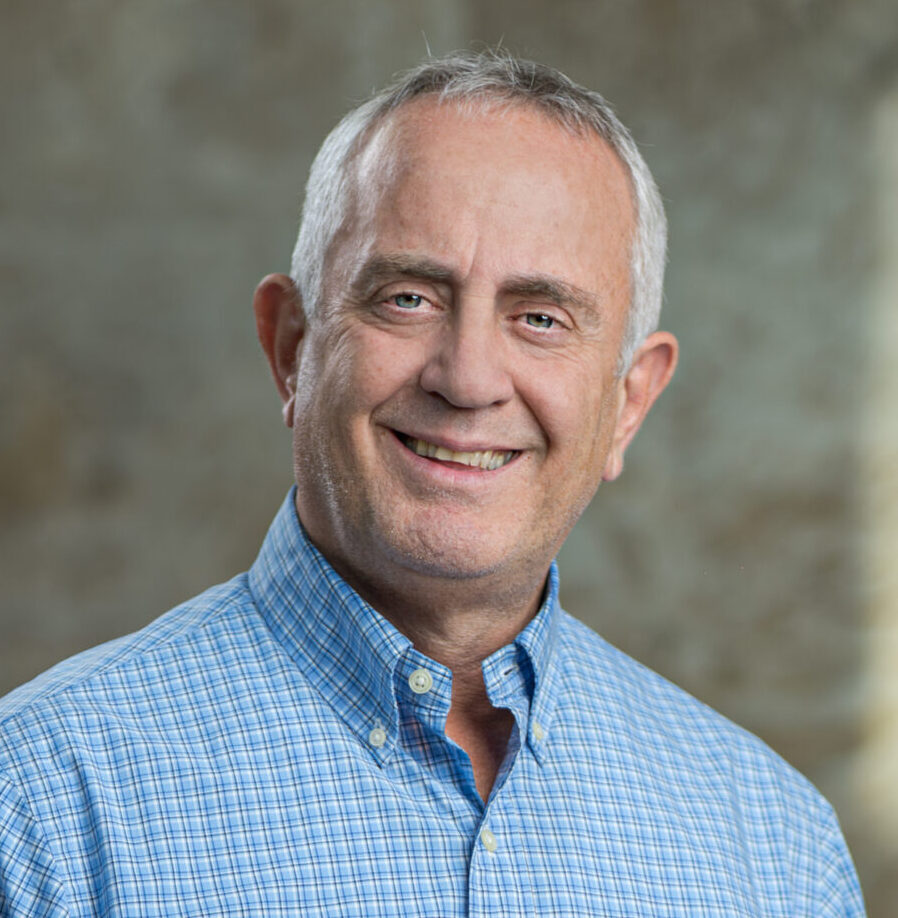 Dr Hadi Abou Chakra
|
Senior Special Scientist – Lecturer |
Dr Hadi Abou Chakra
|
 Dr Noura El-Hassan
|
Assistant Professor |
Dr Noura El-Hassan
|
 Dr Salah Sadek
|
Dean, Faculty of Engineering & Professor of Civil Engineering |
Dr Salah Sadek
|
 Dr Zinon Zinonos
|
Assistant Professor |
Dr Zinon Zinonos
|
 Dr Bonn Kleiford Seranilla
|
Assistant Professor |
Dr Bonn Kleiford Seranilla
|
| Part-time Professors | ||
 Dr Andreas Neofytou
|
Special Scientist-Lecturer |
Dr Andreas Neofytou
|
| Seconded Professors | ||
|
B
Bacel Maddah
Professor and Chair, Department of Industrial Engineering and Management, American University of Beirut
Bacel Maddah
|
Professor and Chair, Department of Industrial Engineering and Management, American University of Beirut |
Bacel Maddah
|
|
K
Karim Zahed
Assistant Professor, American University of Beirut
Karim Zahed
|
Assistant Professor, American University of Beirut |
Karim Zahed
|
|
Y
Youssef Saad
Senior Lecturer, American University of Beirut
Youssef Saad
|
Senior Lecturer, American University of Beirut |
Youssef Saad
|
Accreditation
-
 The Cyprus Agency of Quality Assurance and Accreditation in Higher Education (CYQAA - ΔΙΠΑΕ)
Accreditation and Quality Assurance
This program is officially accredited and approved by the Cyprus Agency of Quality Assurance and Accreditation in Higher Education (CYQAA). For detailed information, you can view the official approval report on the CYQAA website.
Visit CYQAA Website